


Many patients expect a crown to take weeks and multiple visits. CEREC changes that expectation: it brings the scanning, design, and fabrication steps into a single, coordinated visit. That means fewer appointments, no temporary crowns, and immediate restoration of both form and function.
Beyond convenience, the single-visit approach reduces the number of times a prepared tooth is exposed between appointments, which can lower the chance of sensitivity or contamination. For people with busy schedules, the ability to complete a crown or onlay in one sitting simplifies treatment planning and follow-through.
Because the whole workflow happens in the office, the dentist controls every step, from the initial scan to the final fit and finish. That direct oversight helps ensure the restoration matches the planned occlusion and cosmetic goals before the appointment ends.
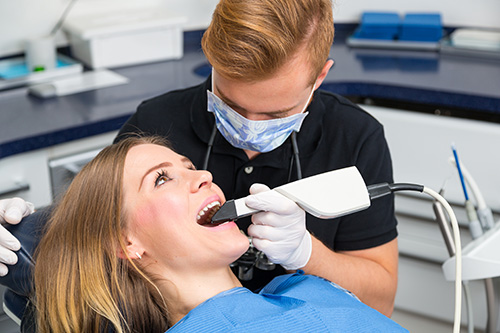
CEREC begins with a digital intraoral scan that captures three-dimensional detail of the prepared tooth and surrounding teeth. The scanning wand is ergonomically designed for patient comfort and provides immediate visual feedback so the clinician can verify accuracy in real time.
Unlike conventional impressions, which can be uncomfortable and imprecise, the digital scan produces a highly accurate virtual model. This model becomes the foundation for the restoration’s shape, contacts, and marginal fit, all critical for longevity and function.
Because the scan feeds directly into CAD software, the design reflects real occlusal relationships and aesthetic contours. That digital link between what we see in the mouth and what the milling machine produces reduces guesswork and helps avoid repeated adjustments after placement.
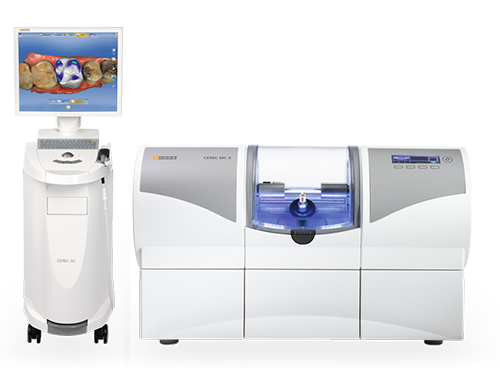
Once the scan is complete, the dentist uses specialized CAD software to design a restoration that fits the tooth’s anatomy and the patient’s bite. The software allows fine-tuning of contours and contact points so the final piece functions harmoniously with neighboring teeth.
The approved design is sent to a chairside milling unit that carves the restoration from a high-strength ceramic block. Milling is precise and repeatable, producing restorations with excellent marginal fit. After milling, the piece is refined, stained or glazed if desired, and polished before placement.
Because the entire process is performed under the dentist’s direct supervision, adjustments are made immediately if necessary. That direct control helps ensure the restoration seats properly and that occlusion is verified in the same appointment, minimizing the need for future corrections.

CEREC restorations are milled from robust ceramic materials engineered for strength and lifelike translucency. Ceramic resists staining and can be matched closely to the shade and surface texture of adjacent teeth, giving a natural appearance that blends well with the rest of your smile.
Properly designed and bonded ceramic restorations perform well under normal chewing forces. Long-term success depends on precise fit, correct occlusion, and routine maintenance, factors that the CEREC workflow helps control by enabling same-day verification and adjustment.
There are cases in which a lab-fabricated restoration remains the most suitable option, such as when highly specialized layering or complex, multi-unit prosthetics are required. Your dentist will recommend the approach that best meets the functional and aesthetic goals for your mouth.
CEREC is a strong choice for single crowns, inlays, onlays, and many veneer cases where a durable, well-fitting ceramic restoration is appropriate. It excels when the goal is a conservative, tooth-preserving repair that restores both appearance and chewing ability in a single visit.
That said, every mouth is different. Complex restorative needs, extensive multi-unit reconstructions, or specific cosmetic layering techniques may call for laboratory collaboration. An in-person evaluation lets the dentist balance the benefits of same-day fabrication against the demands of a particular case and select the best long-term solution.
Our approach emphasizes function as much as form: we consider bite, jaw joint movement, and airway health when planning restorative work. That broader view helps ensure that a restoration not only looks right but also integrates with the mechanics of your smile so it performs reliably over time.
Caring for a CEREC restoration follows the same sensible habits that protect natural teeth: regular brushing with a soft-bristled brush, daily interdental cleaning, and routine dental checkups. Ceramic resists decay but the tooth-restoration interface still requires attention to prevent recurrent issues.
If you clench or grind your teeth, night guards or other protective measures may be recommended to reduce excessive wear. Early detection of minor adjustments, such as a high spot in the bite, is simple during a recall visit and can prevent larger problems down the road.
When minor surface wear or staining occurs over time, the restoration can often be polished or glazed to refresh its appearance. For concerns about fit, function, or sensitivity after placement, bring them to your clinician promptly so small corrections can be made before they escalate.
At Functional Cosmetic Dentistry Associates we integrate advanced digital tools with a functional approach to oral health. That means restorations are planned not only for appearance but to support proper bite mechanics and long-term comfort.
Our clinicians are experienced with the end-to-end CEREC workflow, from accurate digital capture to precise in-office fabrication and bonding. Patients benefit from fewer visits and immediate results while receiving care that is guided by diagnostic evaluation of the jaw and airway when relevant.
We prioritize clear communication throughout treatment, showing patients the digital images and design choices so you understand how the restoration will look and function before it is placed. This collaborative process helps achieve outcomes that meet both cosmetic expectations and functional needs.
CEREC represents a practical, evidence-informed option for many restorative needs, delivering custom ceramic crowns, inlays, and onlays in a single visit. The digital workflow enhances precision, reduces appointment burden, and allows the clinician to verify fit and function immediately.
If you value efficient care without compromising on aesthetics or durability, talk with our team about whether CEREC is appropriate for your situation. We will explain the process, review how it fits your overall treatment goals, and outline what to expect at each step.
Contact us to learn more and determine whether same-day ceramic restorations are a good fit for your smile. We’re happy to answer your questions and help you choose the approach that best supports lasting oral health.
CEREC is a chairside CAD/CAM system that allows the dentist to scan, design, mill, and place ceramic restorations in a single visit. The process begins with a digital intraoral scan that captures three-dimensional detail of the prepared tooth and surrounding dentition. That scan is used to design a restoration in CAD software, which is then sent to an in-office milling unit that fabricates the restoration from a ceramic block.
After milling, the piece is refined, stained or glazed if needed, and tried in to verify fit and occlusion before it is permanently bonded. Because the workflow is completed under the clinician's direct supervision, adjustments can be made immediately to ensure a precise fit. This integration shortens treatment time while preserving control over both aesthetics and function.
CEREC is commonly used for single crowns, inlays, onlays, and many veneer cases where a strong, well-fitting ceramic restoration is appropriate. The system excels at conservative, tooth-preserving repairs that restore both form and chewing function in one appointment. It is also suitable for some implant crowns when conditions permit and the case does not require complex laboratory layering.
There are situations where laboratory fabrication remains preferable, such as extensive multi-unit bridges, highly customized cosmetic layering, or cases that demand special material combinations. During an examination the dentist will determine whether a same-day CEREC restoration or a lab collaboration better meets the functional and aesthetic needs of the patient. That decision prioritizes long-term performance and integration with the bite and jaw mechanics.
A digital intraoral scan captures a precise three-dimensional model of the prepared tooth and adjacent structures, providing immediate visual feedback the clinician can verify in real time. Unlike conventional impression materials, scans avoid distortions from tray movement or material shrinkage and eliminate the discomfort of impression trays for many patients. The virtual model preserves actual occlusal relationships and contact points, which are critical for a restoration that seats properly the first time.
The digital file transfers directly into CAD software, reducing steps where error can be introduced and improving communication between the clinician and the milling unit. This direct digital workflow enhances marginal fit and contact accuracy while decreasing the need for remakes. For patients, that can mean fewer follow-up adjustments and a more predictable restorative outcome.
CEREC restorations are milled from high-strength ceramic materials designed to mimic the translucency and surface texture of natural teeth, and when designed and bonded correctly they perform well under normal chewing forces. Longevity depends on precise fit, correct occlusion, and routine maintenance, all of which the CEREC workflow helps control by enabling same-day verification and adjustment. Surface staining is limited because ceramics resist discoloration better than many restorative materials.
That said, certain highly specialized cosmetic techniques or very large, multi-unit reconstructions may still benefit from laboratory expertise and layering methods that are difficult to reproduce chairside. Your dentist will evaluate the complexity of the case and recommend the approach that best balances aesthetics, strength, and long-term function. The goal is always to select the method that supports a durable result integrated with your bite mechanics.
CEREC restorations are typically milled from blocks of engineered ceramics such as lithium disilicate, feldspathic ceramic, or high-translucency zirconia, each offering different balances of strength and aesthetics. The choice of material depends on the location of the tooth, the occlusal forces it must withstand, and the aesthetic requirements of the case. After milling, restorations can be stained, glazed, or polished to refine surface texture and luster for a natural appearance.
Shade matching combines intraoral visual assessment with digital tools and shade guides to select the closest block color before fabrication. Because the restoration is completed in the office, technicians and clinicians can make immediate adjustments to color and surface characteristics during the appointment. This hands-on control helps achieve a close match to adjacent teeth while maintaining the material properties needed for durability.
A typical CEREC appointment starts with tooth preparation and a digital intraoral scan followed by collaborative design of the restoration in CAD software that you and your dentist can review together. Once the design is approved, the restoration is milled on a chairside unit while you wait, and the milled piece is then refined, glazed or stained if needed, and polished. The dentist will try the restoration in, check contacts and occlusion, and make any necessary adjustments before final bonding.
Because the process is completed in a single visit, patients leave with the final restoration in place rather than a temporary appliance. Post-placement instructions focus on gentle care of the newly bonded restoration and monitoring for any sensitivity or high spots in the bite. A short recall visit may be scheduled to recheck occlusion and confirm that the restoration is functioning comfortably.
Good candidates for CEREC restorations include patients who need single-tooth restorations such as crowns, onlays, or inlays and who value fewer appointments and immediate results. Patients with healthy surrounding teeth and gums who do not require extensive laboratory-based cosmetic layering are often excellent candidates. Those who have difficulty returning for multiple visits because of schedules or travel frequently appreciate the single-visit option.
Certain conditions, such as severe bruxism, large multi-unit reconstructions, or highly customized cosmetic demands, may prompt the dentist to recommend alternative approaches or adjunctive safeguards like night guards. A comprehensive evaluation of bite, jaw joint movement, and airway helps determine whether CEREC fits the treatment plan. The practice prioritizes selections that protect long-term function and comfort.
Caring for a CEREC restoration follows the same sensible habits that protect natural teeth: brush twice daily with a soft-bristled brush, clean between teeth daily, and keep routine dental checkups. Ceramic resists decay, but the margin between restoration and tooth must be monitored to prevent recurrent issues at the interface. Avoid using teeth as tools and minimize exposure to highly abrasive toothpastes that can dull the surface over time.
If you clench or grind your teeth, your dentist may recommend a custom night guard to reduce excessive wear and protect the restoration from overload. Early detection of minor adjustments, such as a high spot in the bite, is simple at a recall visit and can prevent larger problems down the road. If you notice sensitivity, looseness, or a change in how your teeth fit together after placement, contact the office promptly for evaluation.
CEREC can be used to fabricate multiple adjacent restorations in many situations, but full-mouth or extensive multi-unit cases require careful coordination and sometimes laboratory collaboration for optimal aesthetics and structural support. When several neighboring restorations are planned, color consistency and complex occlusal relationships become more demanding and may benefit from staged treatment or lab-finished techniques. The clinician will assess whether chairside fabrication can meet the case requirements or whether hybrid workflows are preferable.
For full-mouth reconstructions, implant-supported bridges, or highly cosmetic cases involving detailed layering, laboratory partnership often adds value through specialized materials and lab-based characterization. The practice integrates functional evaluations of bite and jaw movement into the planning process so that any multi-unit approach supports stable occlusion and long-term comfort. The final recommendation balances efficiency with the demands of durability and appearance.
Our office combines advanced digital tools with a functional approach to oral health, so restorations are planned not only for appearance but to support proper bite mechanics and long-term comfort. Clinicians experienced with the end-to-end CEREC workflow handle scanning, design, fabrication, and bonding in the same clinical setting, allowing immediate verification of fit and occlusion. This integrated process reduces the number of visits while ensuring the restoration aligns with your overall treatment goals.
The practice emphasizes clear communication and patient involvement, showing digital images and design options so you understand how the restoration will look and function before placement. We consider jaw joint movement, muscle factors, and airway health alongside cosmetic objectives to select the approach most likely to perform reliably over time. If you have questions about whether same-day ceramic restorations suit your needs, the team will explain the options and next steps.
Quick Links
