


Missing teeth affect more than your smile: they change how you eat, speak, and how your facial structure is supported. Dental implants are a long-term solution that rebuilds both the visible tooth and the underlying support system that keeps surrounding teeth and bone healthy. Whether you’ve lost a single tooth or need a plan for a full-arch restoration, modern implant dentistry aims to return natural function and appearance with predictable results.
Implants are ideal for people who want a stable, low-maintenance replacement that behaves like natural teeth. Because an implant replaces the tooth root as well as the crown, it preserves the jawbone and prevents the collapse of facial contours that can follow tooth loss. We design every treatment to balance durability with a natural look, taking into account how your bite and jaw move so the restoration lasts comfortably for years.
At Functional Cosmetic Dentistry Associates, our focus is on creating results that fit the way you live, restorations that let you eat what you want, speak clearly, and smile with confidence. We prioritize clear communication and careful planning so you understand the steps involved and the expected outcomes of implant therapy.

A dental implant is a small, biocompatible post surgically placed into the jawbone. Over time it bonds with the surrounding bone, a process known as osseointegration, creating a stable foundation for a crown, bridge, or denture. That root-like support restores chewing power and stops the bone loss that follows extraction, which helps preserve your facial shape and the health of neighboring teeth.
The visible portion of the tooth is recreated with a prosthesis custom-made to match your color, shape, and bite. When restoration and implant are designed together, the result is a replacement that looks natural, feels secure, and functions more like a real tooth than removable options.
Because implants carry forces into the bone in the same way a natural root does, they reduce the risk of adjacent teeth shifting and the long-term breakdown of your bite. This mechanical stability is why implants are often the preferred choice for single-tooth replacement as well as for supporting larger restorations.
Traditional bridges and removable dentures remain useful for many patients, but implants offer distinct advantages in mechanics and long-term oral health. Unlike a conventional bridge, an implant-supported crown doesn't require grinding down adjacent healthy teeth for support. And unlike a removable denture, an implant-supported prosthesis resists slipping and restores chewing efficiency more fully.
Implants also help preserve bone by transmitting chewing forces into the jaw, which signals the body to maintain bone volume. This preservation keeps facial contours firmer and helps maintain the correct vertical height of the bite, important for both function and aesthetics.
With proper hygiene and regular checkups, implant-supported restorations can remain stable for many years. The materials used for crowns and prostheses are highly durable and chosen to blend with surrounding teeth, making the replacement both discreet and long-lasting.
Implant dentistry is not one-size-fits-all. A single implant can replace an isolated missing tooth with a crown that functions independently. For two or more adjacent missing teeth, implant-supported bridges use a small number of posts to carry several crowns without sacrificing neighboring natural teeth. For larger gaps, implants can support full-arch restorations that mimic the stability of natural dentition.
For patients who currently wear removable dentures, implants can anchor those prostheses for greater retention and comfort, or they can be used as the foundation for a fixed full-arch prosthesis that remains in place. Each option is chosen based on bone quality, oral health, and the patient’s goals for comfort and aesthetics.
We select components and designs to match your anatomy and lifestyle, whether that means prioritizing a minimally invasive approach or planning for a fixed restoration that feels like a permanent set of teeth.
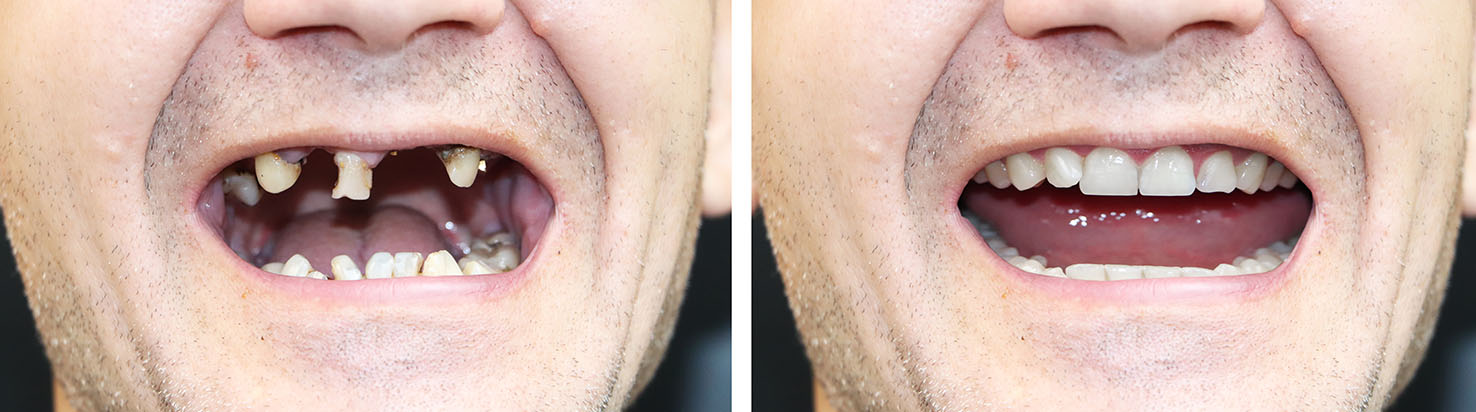
Implant candidacy is determined by a combination of oral health, bone volume, overall medical history, and habits. We use a thorough exam and imaging to evaluate jawbone quality and the position of nearby structures. A healthy mouth and controlled medical conditions improve the likelihood of a successful outcome, and our team will explain how any findings factor into your personalized plan.
Smoking, certain medications, or untreated periodontal disease can affect healing. When these issues exist, we discuss strategies to optimize the environment for implant success. The goal is to create predictable conditions for osseointegration and a long-lasting restoration.
Advanced imaging and digital planning allow us to visualize the final result before surgery and to place implants with precision. This planning reduces surprises and helps us choose the right number, size, and angle for implants to support your specific restoration.
Implant placement is typically performed under local anesthesia, with options for sedation if needed for comfort. The procedure can be straightforward or staged, depending on whether bone grafting or sinus augmentation is required. Most placements are outpatient and followed by a period of healing where the implant integrates with the bone.
Temporary teeth can often be provided so you don’t have to go without a functioning tooth during healing. Once the implant has integrated, the final prosthesis is attached and adjusted so your bite is comfortable and esthetic goals are met. Follow-up visits help us monitor healing and make maintenance recommendations.
Good oral hygiene and routine professional care remain essential after implant therapy to preserve surrounding tissues and the integrity of the restoration.
Bone loss is a common consequence of tooth loss, and inadequate bone volume can compromise implant placement. Bone grafting rebuilds the ridge where necessary, using graft material that supports new bone growth. Grafting can be performed at the time of extraction, before implant placement, or simultaneously with implant surgery depending on the situation.
Successful grafting expands options for implant positioning and long-term stability. Our approach is conservative and targeted: we use the least invasive grafting method that will achieve a predictable foundation for your implant-supported restoration.
Effective implant treatment starts with clear planning. We outline the timeline, diagnostic steps, and clinical stages you can expect, from imaging and any preparatory treatments to surgical placement and final restoration. Our team emphasizes communication so you’re confident in each decision and aware of post-operative care and follow-up.
Maintenance after implant placement is straightforward: regular brushing, flossing, and routine dental visits are essential. Professional cleanings and periodic evaluations help detect early signs of wear or soft-tissue issues so they can be addressed promptly and conservatively.
When the goal is a stable, long-term replacement that supports both function and appearance, implants deliver many advantages. If you’re exploring implant therapy, we will walk you through the clinical steps and craft a treatment plan that reflects your oral health, goals, and lifestyle.
If you’re considering implants and want a careful, individualized assessment, contact our office to arrange a consultation. We’ll review your oral health, answer your questions, and explain the options available so you can decide with confidence about the right path forward.
Functional Cosmetic Dentistry Associates offers comprehensive implant care focused on restoring function, preserving bone, and achieving natural-looking results. Contact us to discuss how implant dentistry can rebuild your smile and improve daily comfort and confidence.
Dental implants are small biocompatible posts placed in the jawbone to replace missing tooth roots and provide a stable foundation for prosthetic teeth. Over time the implant fuses with the bone through osseointegration, creating support similar to a natural root. This integration restores chewing power, preserves the position of neighboring teeth, and helps maintain the structural support of the face.
A custom crown, bridge, or denture is attached to the implant to recreate the visible portion of the tooth and match color, shape, and bite to your existing dentition. When the restoration is designed with attention to occlusion and jaw movement, it performs and feels like a natural tooth. With routine oral hygiene and regular professional checkups, implants can provide predictable, long-term function.
Successful implant candidates typically have good oral health, sufficient jawbone volume, and medical conditions that are well controlled. Active periodontal disease, uncontrolled systemic conditions, heavy tobacco use, or certain medications can affect healing and are evaluated during screening. When these factors are present the clinical team discusses steps such as gum therapy, medical consultation, or smoking cessation to improve the odds of success.
Evaluation includes a clinical exam, periodontal assessment, and advanced imaging to assess bone quality and the relationship to adjacent anatomy. Digital planning helps determine the proper number, size, and angle of implants to meet functional and aesthetic goals. Sedation options are available for patients who need additional comfort during surgical steps.
Planning begins with a comprehensive dental exam that checks the health of the gums, existing restorations, and the bite. Cone beam computed tomography (CBCT) and intraoral scanning provide three-dimensional views of bone volume and critical structures. These diagnostic tools allow the team to visualize the final prosthetic position before surgery and reduce intraoperative surprises.
At Functional Cosmetic Dentistry Associates we combine prosthetic-driven planning with digital workflows to create a treatment plan tailored to each patient’s anatomy and goals. This may include virtual implant placement, surgical guides, and staging strategies when grafting or extractions are required. Clear communication about the proposed sequence of care helps patients understand expectations and postoperative follow-up.
Implant placement is typically performed under local anesthesia, with conscious or IV sedation available for patients who prefer deeper comfort. The procedure can be performed in one stage or staged depending on whether bone grafting or sinus augmentation is needed. Most implant surgeries are outpatient and take from less than an hour for a single implant to longer sessions for more complex reconstructions.
During healing, the implant undergoes osseointegration, a period that commonly ranges from a few weeks to several months depending on the site and any grafting performed. Temporary restorations are often provided so patients maintain function and appearance while the implant integrates. Follow-up visits monitor healing and guide the timing for attaching the final prosthesis to ensure a stable bite and proper esthetics.
Bone grafting is recommended when the jawbone lacks the height or width needed to securely anchor an implant after tooth loss or long-term resorption. Sinus augmentation is used in the upper jaw when the sinus floor is too close to the planned implant position to allow stable placement. Your clinician evaluates ridge dimensions with imaging to determine whether grafting can be done at the time of extraction, before implant placement, or simultaneously with implant surgery.
Graft materials may include autograft, allograft, xenograft, or synthetic options chosen for predictability and patient preference. Healing times vary by technique and material, and successful grafting expands the range of restorative options for a long-term result. The team favors conservative grafting strategies that deliver a predictable foundation with the least invasive approach possible.
Options range from single-tooth implants with a crown to implant-supported bridges that replace several adjacent teeth without altering healthy neighbors. Full-arch fixed restorations can rebuild an entire upper or lower jaw on a limited number of strategically placed implants to restore function and stability. Implant-retained removable prostheses use attachments that allow dentures to snap in and out while improving retention and comfort compared with conventional dentures.
The ideal restoration is selected based on bone quality, oral health, functional needs, and aesthetic goals. Patients who desire a non-removable option may be candidates for All-on-4® or All-on-6® style restorations, while others may prefer removable solutions for ease of cleaning. Your clinician explains the advantages and limitations of each design so you can choose the restoration that best fits your lifestyle.
Unlike traditional bridges, implants do not require reducing adjacent healthy teeth for support, preserving more natural tooth structure. Compared with removable dentures, implant-supported prostheses offer improved stability and chewing efficiency by anchoring forces into the jawbone. Because implants transmit functional loads to bone, they also help slow the bone loss that commonly accompanies tooth loss and denture wear.
Maintenance differs: implants require the same daily hygiene as natural teeth plus periodic professional evaluations to monitor peri-implant tissues. Bridges and dentures remain appropriate for many patients, but implants often provide a mechanical and biological advantage when conditions allow. A careful evaluation helps determine which option best balances preservation of tooth structure, function, and patient preferences.
Long-term care includes twice-daily brushing, daily interdental cleaning with floss or specialized brushes, and use of antimicrobial rinses when indicated. Regular dental checkups with professional cleanings help identify early signs of soft-tissue inflammation or mechanical wear. Maintaining good periodontal health is critical because the same bacteria that cause gum disease can affect implants.
Patients with a history of periodontal disease should follow a tailored maintenance schedule to reduce the risk of peri-implantitis. Avoiding tobacco and managing systemic health factors like diabetes also supports long-term implant success. If issues arise, early intervention can often treat tissue problems conservatively and preserve implant function.
Digital imaging such as CBCT and intraoral scans creates a three-dimensional map of bone, nerves, and adjacent roots for precise planning. Prosthetic-driven planning uses these data to position implants so the final restoration achieves proper form, function, and esthetics. This level of visualization reduces surprises during surgery and improves communication between surgical and restorative teams.
The team at Functional Cosmetic Dentistry Associates integrates guided surgical templates and digital workflows when appropriate to increase placement accuracy and streamline restoration. Guided techniques can shorten surgery time, reduce invasiveness, and help ensure implants are placed at the angles and depths that support predictable prosthetics. Although guided placement is not required for every case, it is a valuable tool for complex anatomy and full-arch reconstructions.
Implant therapy is planned with consideration of the entire stomatognathic system so restorations function harmoniously with the bite and jaw joints. A thorough occlusal analysis and TMJ evaluation identify any joint movement, muscle tension, or occlusal forces that could affect the restoration. When necessary, bite adjustments, orthodontics, or occlusal appliances are incorporated into the treatment sequence to protect both implants and natural teeth.
For patients with sleep-disordered breathing, dental implants restore missing dentition but do not replace sleep appliances when those are clinically indicated. Our approach coordinates implant rehabilitation with sleep or TMJ therapies so that oral appliances, airway management, and prosthetic design work together rather than against each other. This multidisciplinary planning helps ensure implant restorations support comfortable function without exacerbating existing jaw or airway concerns.
Quick Links
